
Why Finding the Right Divorce Attorney Near You Matters

Divorce attorney near you is a critical search when your marriage ends. The right local lawyer can save you thousands of dollars, protect your parental rights, and guide you through one of life’s most stressful transitions with clarity and compassion.
Quick Answer: How to Find a Divorce Attorney Near You
- Search local bar association referral services for vetted family law specialists
- Check peer review ratings like AV® Preeminent™ from Martindale-Hubbell
- Read client testimonials focusing on communication and results
- Schedule consultations with 2-3 attorneys to compare approach and fees
- Verify local court experience in your specific jurisdiction
Divorce is difficult. Finding the right lawyer doesn’t have to be.
The average divorce in the United States costs between $15,000 and $30,000, with attorney fees ranging from $200 to $350 per hour. These numbers can feel overwhelming when you’re already dealing with emotional turmoil and uncertainty about your future.
But here’s the reality: the attorney you choose directly impacts both your financial outcome and your emotional wellbeing during this transition.
In Norwalk and surrounding Southern California communities, families face unique challenges. California’s community property laws, local court procedures, and the high cost of living all play a role in your divorce outcome. A lawyer who practices in your area understands these nuances.
This guide walks you through the practical steps to find a qualified, compassionate divorce attorney near you without breaking the bank. You’ll learn what to look for, what questions to ask, and how to evaluate whether a lawyer is the right fit for your specific situation.
Whether you’re facing child custody concerns, complex property division, or spousal support negotiations, the right legal partner makes all the difference.
Understanding the Role of a Divorce Attorney
When facing a divorce, the legal landscape can seem like a dense fog. Our role as your divorce attorney is to be your guide, translator, and advocate. We don’t just handle paperwork; we strategize, negotiate, and, if necessary, represent you vigorously in court. We are here to help you understand your legal rights and obligations, ensuring your interests are protected at every turn. Our goal is to achieve the best possible outcome for you and your family, allowing you to move forward with confidence.

Our primary services encompass a wide range of family law matters. From the initial consultation to the final decree, we provide comprehensive legal support. This includes:
- Legal Strategy: Developing a custom plan that considers your unique circumstances and objectives.
- Court Representation: Appearing on your behalf in court hearings and trials, presenting your case effectively.
- Negotiation: Working to reach amicable agreements with your spouse’s legal team, often through skilled negotiation.
- Paperwork Filing: Preparing and filing all necessary legal documents accurately and on time with the court.
For a broader understanding of family law and why expert legal counsel is crucial, explore our Family Law page. If you’re still weighing the decision to hire legal representation, consider these 5 Reasons to Hire a Top-Rated Divorce Lawyer.
Key Areas of Expertise
Divorce attorneys specialize in several critical areas that directly impact your future. Understanding these areas will help you appreciate the value a skilled divorce attorney near you brings to the table:
- Child Custody: This involves determining legal custody (who makes decisions about the child’s upbringing) and physical custody (where the child lives). Our attorneys work to establish parenting plans that serve the child’s best interests, considering factors like the child’s health, safety, and welfare.
- Child Support: We help calculate appropriate child support payments based on California guidelines, ensuring children receive the financial resources they need from both parents.
- Spousal Support (Alimony): Also known as alimony in other states, spousal support in California is designed to help a lower-earning spouse maintain their standard of living post-divorce. We steer the complex factors courts consider when determining the amount and duration of spousal support. You can learn more about this in Spousal Support in Norwalk: How California Courts Determine Alimony.
- Property Division: California is a community property state, meaning assets and debts acquired during the marriage are typically divided equally between spouses. We help identify, value, and distribute marital property fairly.
- Prenuptial and Postnuptial Agreements: These agreements can define how assets and debts will be divided in the event of a divorce, providing clarity and protection for both parties. Your attorney can help draft or review these agreements.
- Military and Federal Employee Divorces: These cases present unique challenges due to federal laws governing military retirement, disability benefits, and federal pensions (like FERS) and Thrift Savings Plans (TSP). A California divorce attorney near you with experience in these areas understands how federal regulations intersect with state community property laws, ensuring these complex assets are properly divided.
Contested vs. Uncontested Divorce
The path your divorce takes often depends on the level of agreement between you and your spouse. We help guide you through both scenarios:
- Defining Uncontested Divorce: An uncontested divorce occurs when both spouses agree on all divorce-related issues, including child custody, support, property division, and spousal support. This path is generally quicker, less expensive, and less emotionally taxing. While court resolution of disputes isn’t needed, a final hearing is still required.
- Defining Contested Divorce: A contested divorce arises when spouses cannot agree on one or more key issues. This often requires more extensive negotiation, mediation, and potentially litigation in court to resolve disputes. The attorney’s role here is to advocate for your position on each disputed matter.
- Attorney’s Role in Each: In an uncontested divorce, our role often focuses on drafting comprehensive agreements, ensuring all legal requirements are met, and guiding you through the final court approval process. For a contested divorce, we become your zealous advocate, preparing your case, gathering evidence, negotiating aggressively, and representing you in court if necessary.
- Cost Differences: Uncontested divorces typically cost less due to reduced attorney hours and court involvement. Contested divorces, with their extended negotiations and potential for litigation, can incur significantly higher costs. To better understand the overall process, you can refer to Understanding the Divorce Process in Norwalk, California.
How to Find the Right Divorce Attorney Near You
Finding the right divorce attorney near you is one of the most important decisions you’ll make during this challenging time. It’s not just about legal expertise; it’s about finding someone who understands your local community, can communicate effectively, and truly has your best interests at heart.

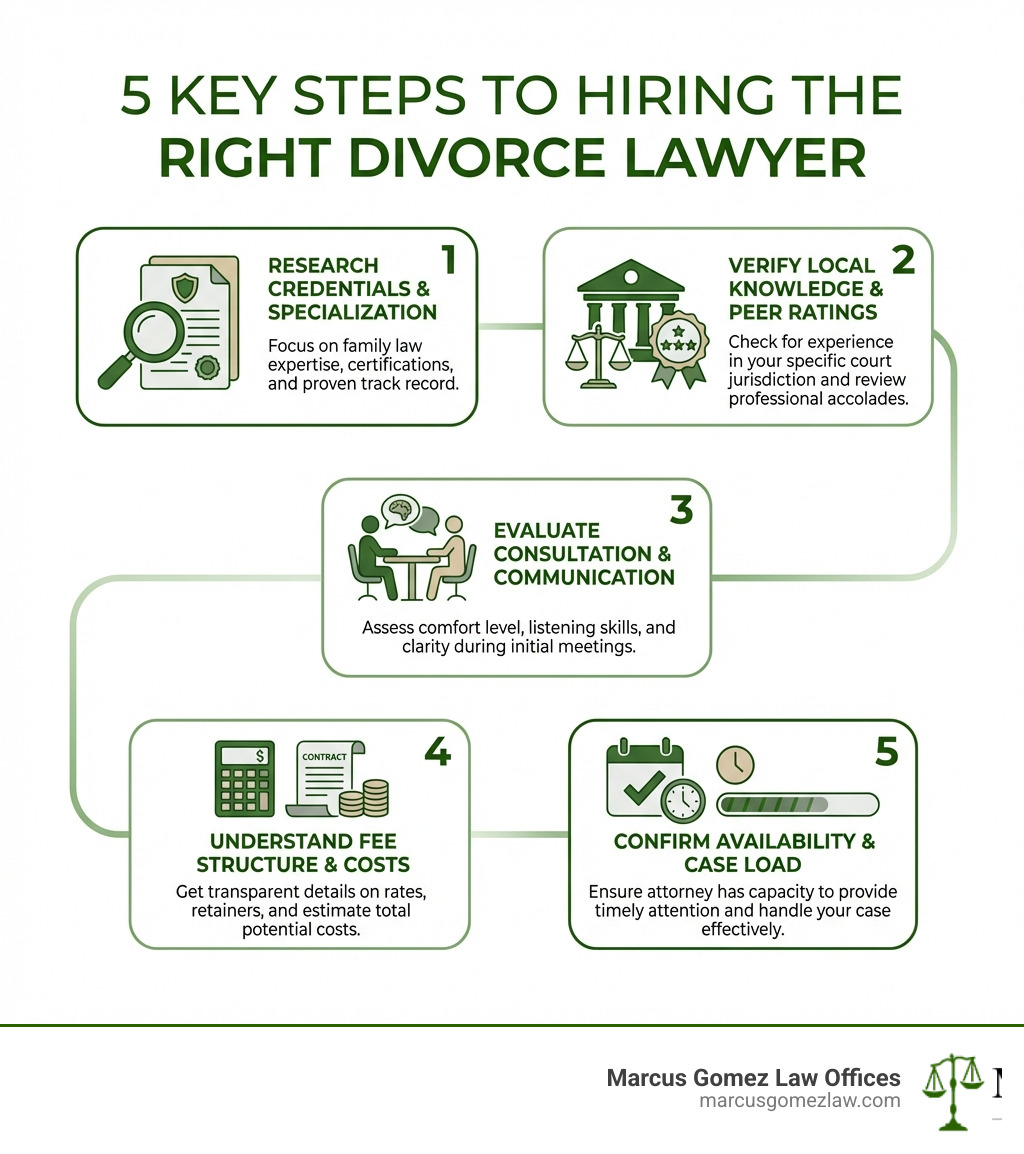
Here’s how we recommend approaching your search. To make the most of your consultations, go prepared with a list of key questions to ask each potential attorney:
- What percentage of your practice is dedicated to family law?
- Have you handled cases with issues similar to mine in my local court?
- What is your general approach to resolving divorce cases (e.g., negotiation vs. litigation)?
- Who will be my primary point of contact, and what is your firm’s policy on returning calls and emails?
- What is your fee structure, what does the retainer cover, and can you provide an estimate of the total cost for a case like mine?
Research and Credentials
When you’re looking for a divorce attorney near you in Southern California, we encourage you to prioritize experience, specialization, and local knowledge.
- Experience Level: Look for attorneys with a proven track record in family law. Our firm, for example, has extensive experience since 1978, bringing decades of knowledge to your case. This kind of long-standing presence often indicates deep understanding of the intricacies of divorce law.
- Family Law Specialization: While some attorneys practice various types of law, those who focus exclusively on family law tend to have a deeper expertise in the nuances of divorce, child custody, and support cases.
- Local Court Knowledge: A divorce attorney near you who is familiar with the specific judges, court staff, and local rules in Norwalk, Downey, Santa Fe Springs, La Mirada, Whittier, Anaheim, Orange County, or Riverside County can offer a significant advantage. They understand the local legal culture and can steer the system more efficiently.
- Peer Review Ratings: Ratings like the AV® Preeminent™ Peer Review Rating by Martindale-Hubbell® are the highest recognition possible in the legal industry, signifying exceptional legal ability and ethical standards. This is a strong indicator of a lawyer’s reputation among their peers. We also recommend checking other directories like Justia and Super Lawyers for client reviews and peer nominations.
- Bar Association Referrals: Local bar associations, such as those in Los Angeles or Orange County, often offer referral services for vetted family law specialists. This can be a great starting point to find qualified professionals. While the NYC Bar Association link is for New York, the principle of using a local bar association for referrals is a sound practice everywhere: Using a local bar association for referrals.
Evaluating the Cost of a Divorce Attorney Near You
Understanding the financial aspect of hiring a divorce attorney is crucial for managing expectations and avoiding surprises.
- Average Hourly Rates: The average divorce lawyer cost in the U.S. can range from $200 to $350 per hour. In Southern California, these rates can sometimes be higher due to the cost of living and specialized expertise.
- Retainer Fees: Most divorce attorneys work on a retainer basis. This is an upfront payment that the attorney draws from as they work on your case. The size of the retainer can vary significantly based on the complexity of your case and the attorney’s hourly rate.
- Consultation Costs: Some firms offer free initial consultations, while others charge a fee. For instance, some firms might offer free consultations for estate planning but charge a $50.00 consultation fee for family law matters. It’s always best to clarify this upfront. Our firm offers free consultations to discuss your specific needs.
- Average Total Divorce Cost: As mentioned, the average total cost of a divorce in the U.S. can range from $15,000 to $30,000. This figure can escalate quickly in contested cases involving complex assets or protracted child custody disputes.
- Fee Structures: Beyond hourly rates, attorneys may also charge for specific tasks or use flat fees for certain services (e.g., drafting an uncontested divorce agreement). Ensure you understand the fee structure before committing.
- Financial Transparency: A good divorce attorney near you should be transparent about their fees and provide a clear written agreement outlining costs, billing practices, and what the retainer covers. Don’t hesitate to ask for regular updates on billing.
For more insights into financial considerations during divorce, particularly regarding support, you can read How is Spousal Support Determined During a Divorce?.
Navigating Key Issues in Your Divorce
Divorce isn’t just about ending a marriage; it’s about untangling a shared life, which includes finances, children, and future plans. Your attorney will be instrumental in navigating these critical components.
The decisions made during this process can have significant long-term consequences for your financial stability and family relationships. It’s why we emphasize a thoughtful and strategic approach. For a broader perspective on the lasting impact of these decisions, consider Family Law and Long-Term Consequences.
Dividing Property and Protecting Your Finances
California’s community property laws make asset and debt division a central focus of any divorce. We help ensure a fair outcome while safeguarding your financial future.
- Community Property vs. Separate Property: In California, community property generally includes all assets and debts acquired by either spouse during the marriage. Separate property includes assets owned before marriage, inherited property, or gifts received by one spouse. We help carefully identify and characterize these assets to ensure they are divided correctly.
- High-Asset Divorce: Cases involving significant wealth, businesses, or complex investments require specialized expertise. We work with financial experts to ensure accurate valuation and equitable distribution of these assets.
- Business Valuation: If one or both spouses own a business, its valuation becomes a critical component of property division. We can engage forensic accountants to determine fair market value.
- Retirement Accounts: Pensions, 401(k)s, IRAs, and other retirement accounts are often considered community property and require specific legal orders (like Qualified Domestic Relations Orders or QDROs) for division.
- Protecting Your Financial Future: Our aim is to ensure you emerge from the divorce with a stable financial foundation. This involves not only fair property division but also strategic planning regarding spousal support and potential tax implications. Learn more about how property is divided in What to Know About Property Division in a Norwalk Divorce.
Child Custody and Support Matters
For parents, child-related issues are often the most sensitive and important aspects of a divorce. Our focus is always on the best interests of your children.
- Best Interest of the Child: California courts prioritize the child’s health, safety, and welfare when making custody decisions. We help present a compelling case that aligns with this standard.
- Legal Custody: This determines which parent has the right to make decisions about the child’s education, healthcare, and religious upbringing. It can be sole or joint.
- Physical Custody: This refers to where the child lives. It can also be sole or joint, often resulting in a detailed parenting schedule.
- Parenting Plans: We assist in developing comprehensive parenting plans that outline visitation schedules, holiday arrangements, communication protocols, and other important aspects of co-parenting.
- Child Support Calculations: Child support is calculated based on state guidelines, considering factors like parental income, time spent with each parent, and specific expenses. We ensure accurate calculations and fair orders.
- For detailed information on how these decisions are made, please visit How Child Custody Decisions Are Made in Norwalk Family Court and our main Child Custody page.
The Role of Mediation and ADR
While litigation is sometimes necessary, we recognize that not every divorce needs to be a courtroom battle. Alternative Dispute Resolution (ADR) methods offer less confrontational and often more cost-effective solutions.
- Alternative Dispute Resolution (ADR): This umbrella term includes various methods for resolving legal disputes outside of traditional court litigation.
- Mediation Process: In mediation, a neutral third party (the mediator) helps spouses communicate and negotiate to reach mutually acceptable agreements. The mediator does not make decisions but facilitates discussion. This can be an extraordinary process for resolving divorce issues.
- Collaborative Divorce: This is a process where both spouses, each represented by their own attorney, commit to resolving issues outside of court. All parties agree to work cooperatively to find solutions that benefit the entire family.
- Benefits of ADR: These methods can significantly reduce conflict, preserve co-parenting relationships, and save both time and money compared to traditional litigation. They empower spouses to have more control over their divorce outcome.
- Reducing Conflict, Saving Money: By focusing on solutions rather than adversarial tactics, mediation and collaborative divorce can mitigate the emotional and financial toll of a divorce. For insights into our approach, you can visit our Divorce Lawyer Whittier page, which highlights our commitment to finding the right solution for you and your family.
Frequently Asked Questions about Divorce Law
We understand you likely have many questions as you steer this process. Here are answers to some common inquiries we receive from clients in Southern California.
What are the grounds for divorce in California?
California is a “no-fault” divorce state. This means that you do not need to prove fault (like adultery or abandonment) to get a divorce. The only legal grounds for divorce in California are:
- Irreconcilable Differences: This is the most common ground, meaning there are fundamental differences in the marriage that cannot be resolved, leading to the breakdown of the marriage.
- Incurable Insanity: This is a rare ground, requiring proof that one spouse is incurably insane.
To file for divorce in California, at least one spouse must have resided in the state for six months and in the specific county where they are filing for three months.
What should I bring to my first consultation with a divorce attorney near me?
Coming prepared to your initial consultation can make it more productive and efficient. We recommend bringing:
- Financial Documents: This includes recent tax returns, pay stubs, bank statements, investment account statements, retirement account statements, and any information on debts (mortgage, credit cards, loans).
- List of Assets and Debts: A comprehensive list of all property you and your spouse own (real estate, vehicles, valuables) and all debts.
- Timeline of Your Marriage: Key dates such as the date of marriage, date of separation, and dates of birth for any children.
- List of Questions: Write down all your questions and concerns. This ensures you cover everything important to you.
- Identification: A valid form of identification.
How can a divorce attorney manage the emotional aspects of the case?
While we are legal professionals, we understand that divorce is an emotional experience. Our approach includes:
- Providing Objective Advice: We offer clear, objective legal guidance, helping you make rational decisions even amidst emotional turmoil.
- Connecting Clients with Resources: We can refer you to therapists, counselors, or support groups that specialize in divorce, providing a holistic support system.
- Managing Communication: We act as a buffer between you and your spouse, handling all legal communications to reduce direct conflict and emotional strain.
- Setting Realistic Expectations: We provide an honest assessment of potential outcomes, helping you prepare mentally and emotionally for the road ahead.
- Maintaining Professionalism: We maintain a calm and professional demeanor, helping to de-escalate tension and keep the process focused on legal resolution. Our firm prides itself on giving individual attention to each client and assisting them through what are often very trying times in their lives.
Conclusion: Taking the First Step Towards Your Future
Navigating a divorce can feel like an uphill battle, but with the right divorce attorney near you, it becomes a manageable journey. We’ve explored the crucial role your attorney plays, from understanding complex legal areas like child custody and property division to guiding you through contested or uncontested processes. We’ve also highlighted the importance of carefully evaluating costs and credentials, ensuring you find a legal partner who is not only skilled but also a good fit for your personal needs.
Investing in the right legal representation is an investment in your future. A compassionate, experienced attorney will be your advocate, helping you protect your assets, secure your parental rights, and build a stable foundation for your new beginning. They will serve as your trusted partner, providing guidance and support every step of the way.
For those in Southern California, firms like Marcus Gomez Law Offices specialize in guiding clients through this process with personalized care and extensive local knowledge. If you’re ready to take that crucial first step towards a brighter future, we invite you to Find a compassionate Downey divorce lawyer to help you move forward.